

Spiritual Discernment in the Age of Aesthetic Priestessing
Let’s be honest: the word “priestess” has gone viral.
It’s in workshops, coaching programs, “mystery schools,” and influencer bios, usually wrapped in intoxicating imagery: veils, chalices, candlelit circles, and sacred language that promises remembrance, empowerment, and divine purpose.
And listen, the desire to remember who we are, to walk as love and lead from soul, is holy.
But here’s the shadow side of the trend:
In the age of beautiful branding and AI-generated “wisdom,” discernment has never been more necessary.
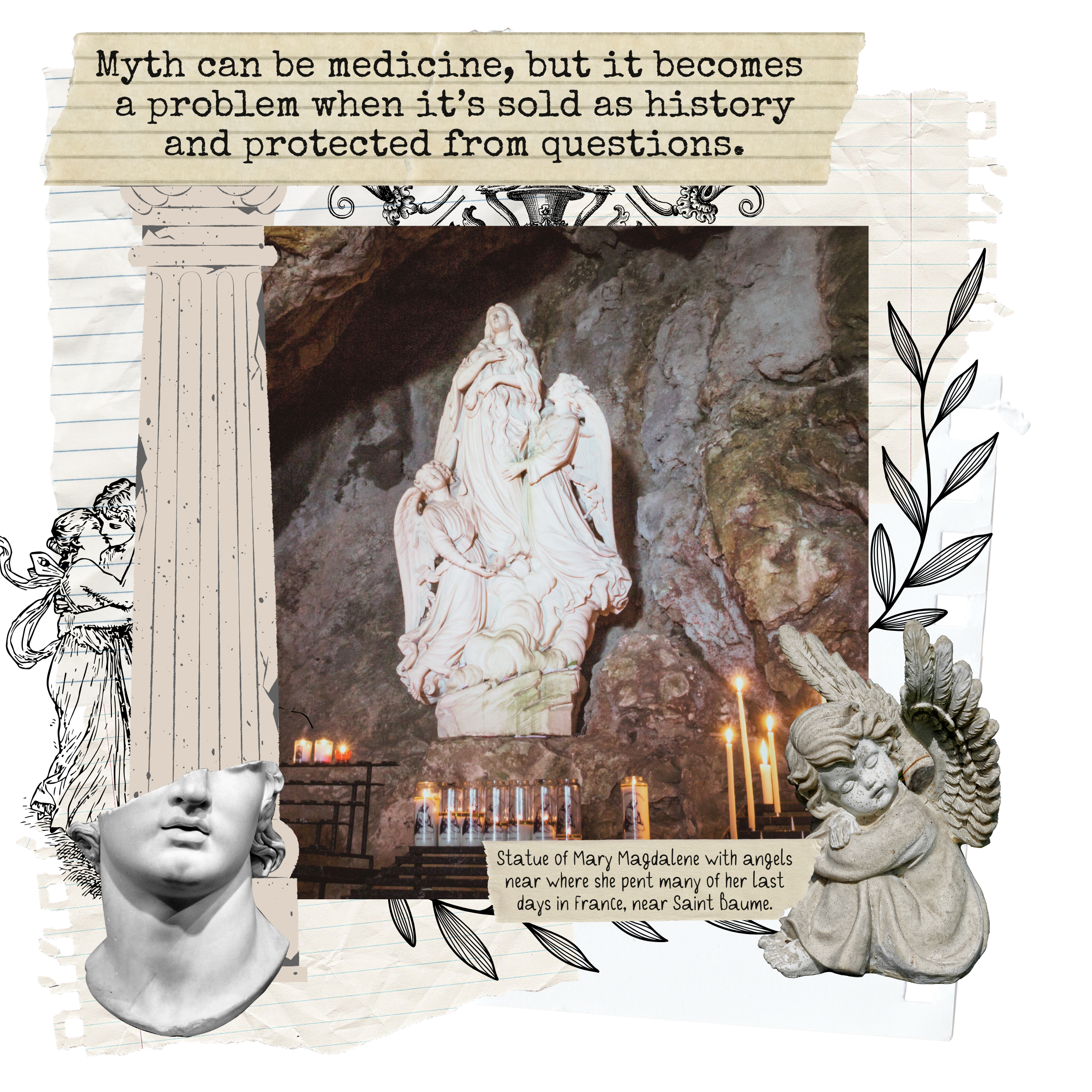
1. Myth ≠ History
Many modern mystery schools tell the story of “ancient priestess lineages” destroyed by the patriarchy: goddess temples burned, wisdom erased, sacred feminine power suppressed in one sweeping purge.
It’s poetic. It’s cinematic.
But historically? That “single story” usually doesn’t hold.
Religious transitions didn’t happen in one universal, coordinated event. They unfolded unevenly over time, shaped by politics, economics, cultural blending, conflict, and changing laws.
And to be clear: there were persecutions, forced conversions, and real violence in many times and places. The issue is when a complex history becomes a simplified marketing myth that can’t be questioned without spiritual shaming.
Myth is sacred story, not historical record.
It can awaken remembrance, but we have to know when we’re in metaphor… and when we’re in manipulation.
2. Gender ≠ Archetype
Even when programs claim to be inclusive (“men, women, Two-Spirit, every being”), the tone often equates “feminine” with “woman” and positions divine power as exclusively feminine.
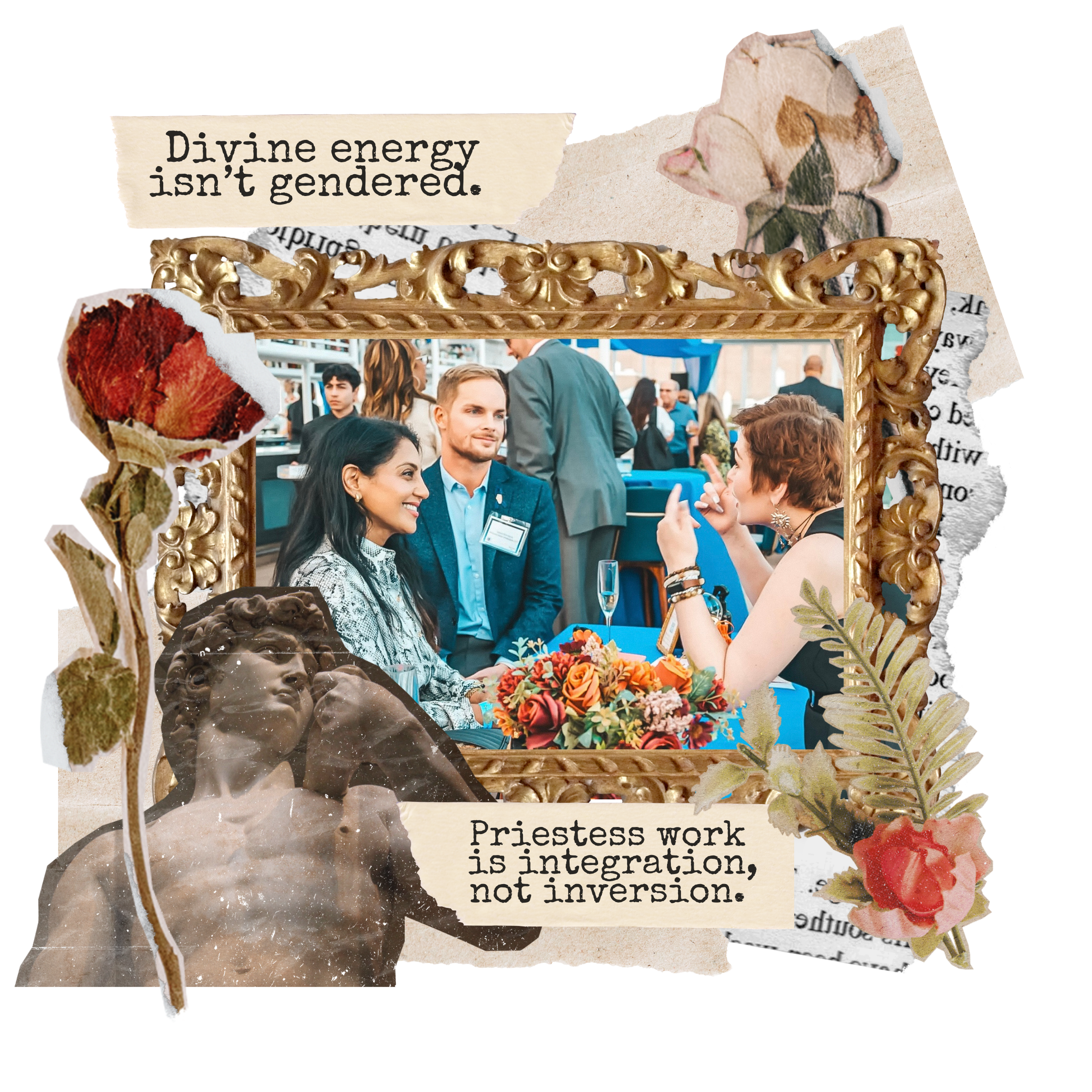
But divine energy isn’t gendered.
The Divine Masculine is not the patriarchy. It can be devotion, protection, structure, integrity, sacred purpose.
True priestess work honors the whole spectrum: feminine, masculine, fluid, nonbinary, and beyond. Real magic is integration, not inversion.
Language integrity note: “Two-Spirit” is not a catch-all synonym for “nonbinary.” It’s a modern umbrella term used by some Indigenous people and communities, with cultural specificity and history. If a program name-drops it, they should do so with real respect and context, not as a vibe accessory.
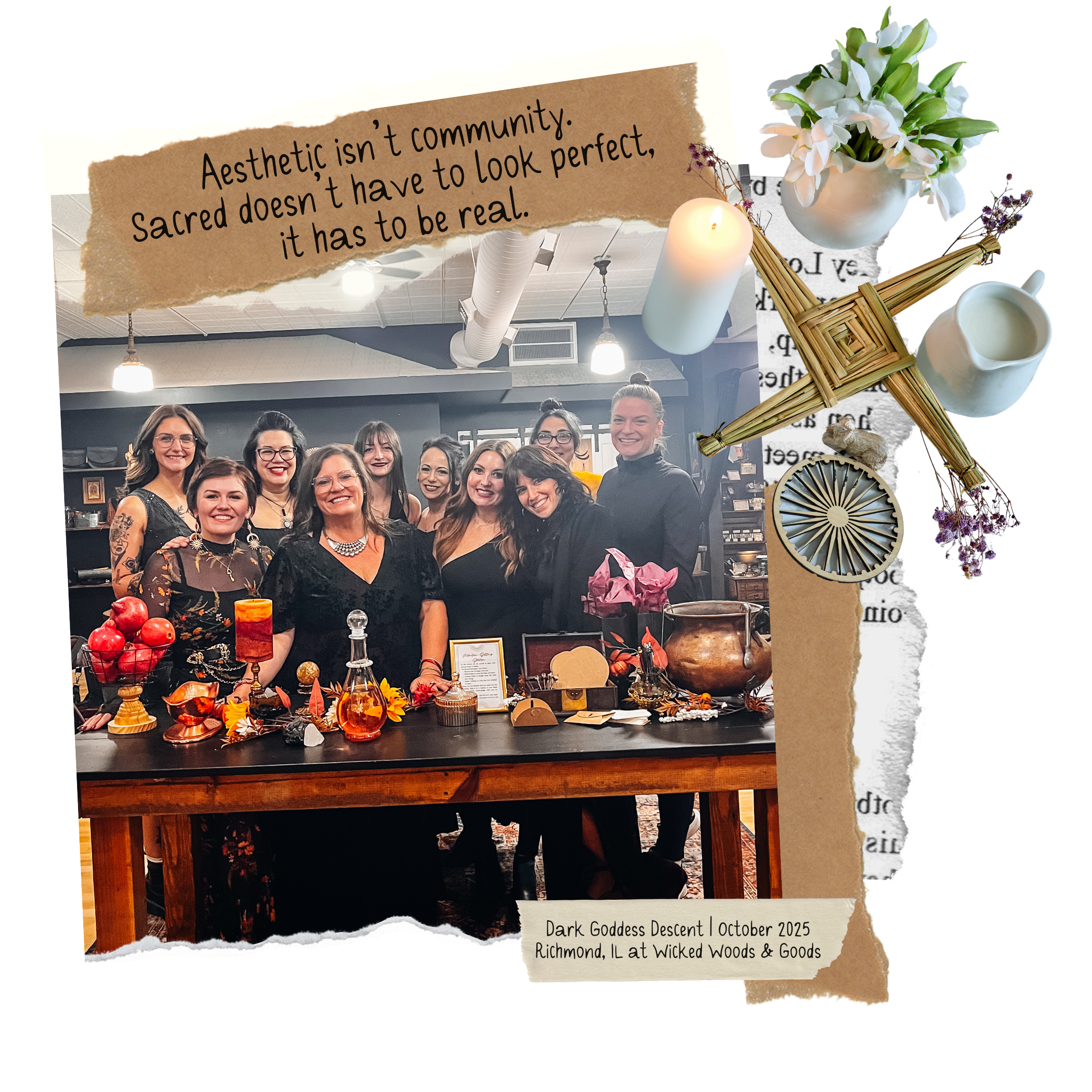
3. Representation Matters (“Aesthetic” is not community)
If a “temple” has been around for years, but the photos are mostly stock images, AI-generated group shots, or the same founder in flowy robes over and over… pause.
Aesthetics aren’t evil. I love symbolism as much as anyone.
But when a path is built on performance rather than presence, it’s worth asking:
Where’s the community?
Where’s the lived practice?
Where’s the humanity?
Spirituality doesn’t need to look perfect. It needs to feel real.
I was whole.
4. Research & Fact Check (especially in the age of AI)
In the age of AI, everyone’s an expert now.
AI can generate gorgeous, sacred-sounding content in seconds. But “sacred-sounding” is not the same as “well-sourced,” and it’s definitely not the same as “embodied.”
Also: AI detectors are not a trustworthy referee. They can have high error rates and create false accusations and false confidence.
So instead of playing “spot the robot,” look for verifiability:
Are there sources you can actually check?
Do they distinguish between personal gnosis, mythic teaching, and historical claim?
Are they transparent about what AI was used for (if at all)?
Do they take responsibility for what they publish?
For practical verification thinking, journalists have been building these muscles for years.
5. Money & Accessibility tells the truth faster than branding
If a program preaches collective healing but offers no scholarships, sliding scale options, or accessible entry points, that’s information.
You can learn a lot about an organization’s values by how it handles money and access.
Are they devoted to teaching the mysteries…
or guarding them behind a paywall of privilege?
True priestesshood expands access to the sacred, not limits it.
6. Borrowing ≠ Lineage
When a school lists well-known pagan authors and spiritual teachers as “contributors” without clarification, pause.
Did those teachers actually collaborate?
Or were their ideas referenced, repackaged, and resold?
It’s like the Olivia Rodrigo and Paramore situation: sometimes it’s inspiration; sometimes it’s quiet borrowing.
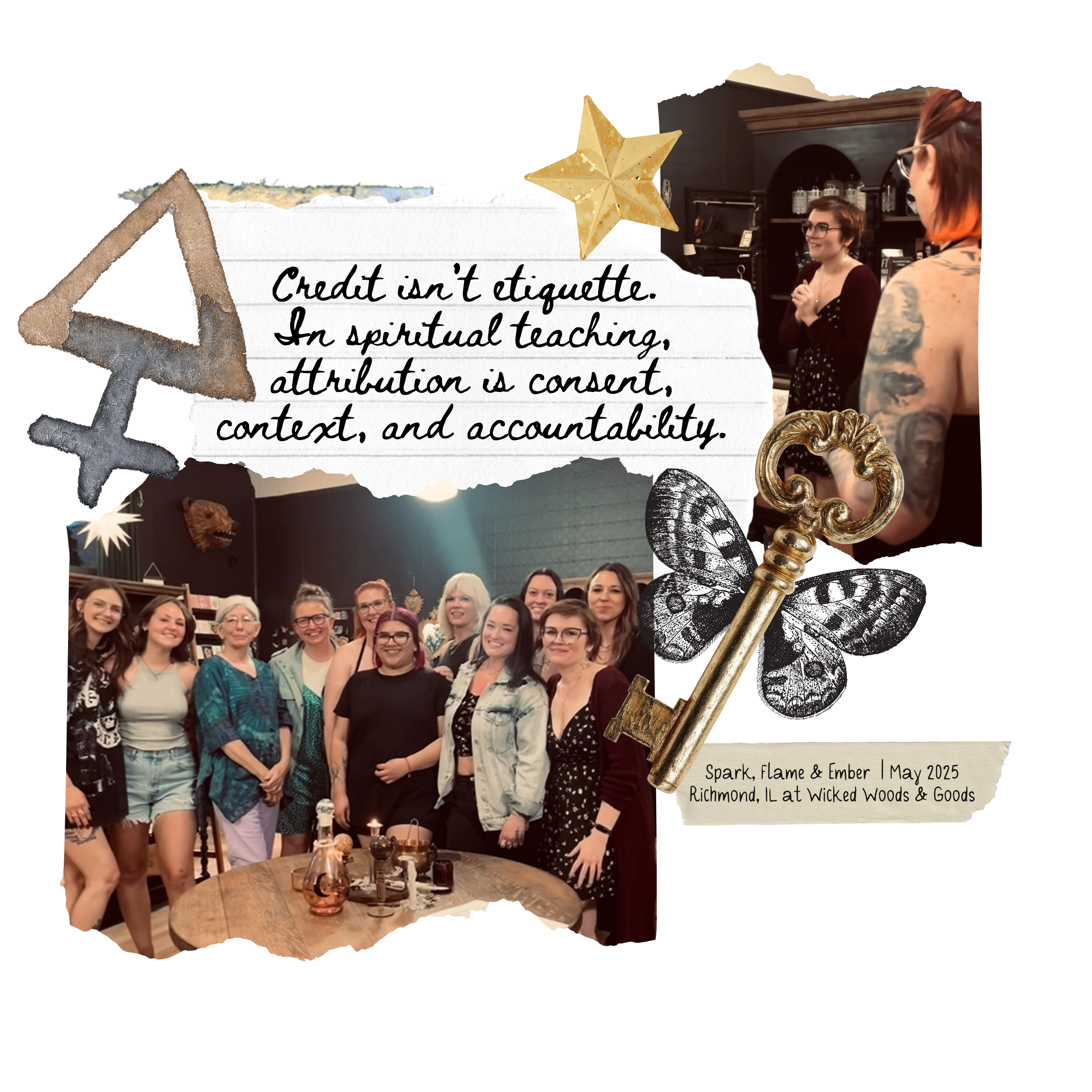
In spiritual teaching, attribution isn’t aesthetic etiquette.
It’s how we practice consent, context, and accountability in the lineage of ideas.
7. Power dynamics and “Gatekeeping the Divine”
Language like “Focalizer,” “Temple Keeper,” or “Gatekeeper of the Mysteries” sounds exalted, but pay attention to the structure underneath it.
Does the teacher empower you, or make you dependent?
Do they honor your autonomy, or position themselves as the final authority between you and the sacred?
If you want a grounded framework for how high-control dynamics form, “bounded choice” is a useful lens.
True mentorship opens doors.
It doesn’t demand devotion.

You Don’t Need a Certificate to Be a Priestess
You don’t need a mystery school, a title, or a temple to remember who you are.
You already carry the mystery in your bones.
Initiation happens daily:
in your boundaries, your relationships, your grief, your healing, your devotion.
So before you commit to any path, ask yourself:
Does this empower me or make me dependent?
Does it honor the full divine spectrum?
Does it feel inclusive, ethical, and real?
Does it use myth as metaphor, not manipulation?
Does it invite me deeper into myself, or into someone else’s hierarchy?
Your intuition and your discernment are sacred allies.
In a world where AI can imitate wisdom, your body’s truth is the original technology.
That’s the real magic.
That’s the real mystery.

Sources + Further Research
Modern Paganism, witchcraft history, and “lineage” claims
Mythic “matriarchy” narratives and historical rigor
Religious change in Late Antiquity (complex, uneven transitions)
Ramsay MacMullen, Christianizing the Roman Empire, A.D. 100–400 (Yale University Press).
Garth Fowden, “Between Pagans and Christians” (Journal of Roman Studies, JSTOR).
Two-Spirit terminology and cultural specificity
AI literacy and why “AI detectors” are unreliable
Power dynamics, undue influence, and high-control structures
Ready to experience a session rooted in compassion, empowerment, and true healing?
Book your intuitive reading, reiki session, or spiritual coaching appointment today and discover how supported you can truly feel.
Click here to schedule your session!
Not sure which session is right for you?
Reach out — I’d love to help guide you to the best starting point.